Discover
FROM PICENE ROOTS TO A LIVING VILLAGE
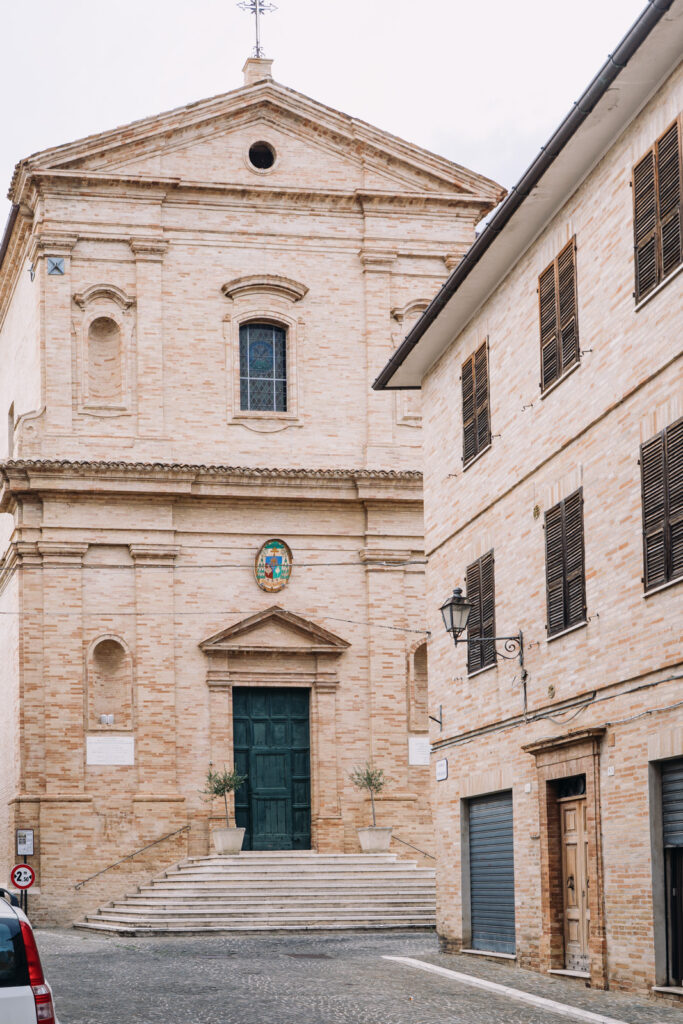
Grottazzolina traces its origins to the Picene civilization: archaeological excavations have uncovered a necropolis dating back to the 8th century BC, evidence of a thriving community in ancient Picenum. In the medieval period, around the 10th century, monks from the Abbey of Farfa built the first fortified core of the settlement, initially known as Montebello and later as “Grotta dei Canonici.”
The current name, Grottazzolina, derives from Azzo VII d’Este—known as Azzolino—to whom Pope Honorius III entrusted the Marca of Fermo in the 13th century. In the centuries that followed, under the influence of the nearby city of Fermo, the village consolidated its layout around the castle, the church, and the walls that still define its historic profile today. Castello Azzolino remains the symbol of its defensive past, offering evocative views over hills, valleys, and the Adriatic coast.
From the 14th century, Grottazzolina was under the rule of Fermo, experiencing centuries marked by clashes, conspiracies, and plagues, yet always showing the strength to rebuild and move forward. Oliverotto Euffreducci recognized its strategic value, choosing it as the site for a cannon foundry. The town became a free municipality for the first time in 1537, but it was only in 1860, with the Unification of Italy, that it gained full administrative autonomy.
In the 20th century, the local administration invested in services and infrastructure: schools, fountains, roads, a medical and surgical clinic, a post office, and even the Adriatic–Fermo–Amandola railway. A strong musical tradition also took root with the founding of the municipal band. Distinguished figures such as the baritone Francesco Graziani and Professor Vincenzo Monaldi have linked their names to the political and cultural history of the town.
Today, Grottazzolina continues to bring together historical memory and development, keeping its identity alive.
TRADITIONS, CULTURE, AND FLAVORS
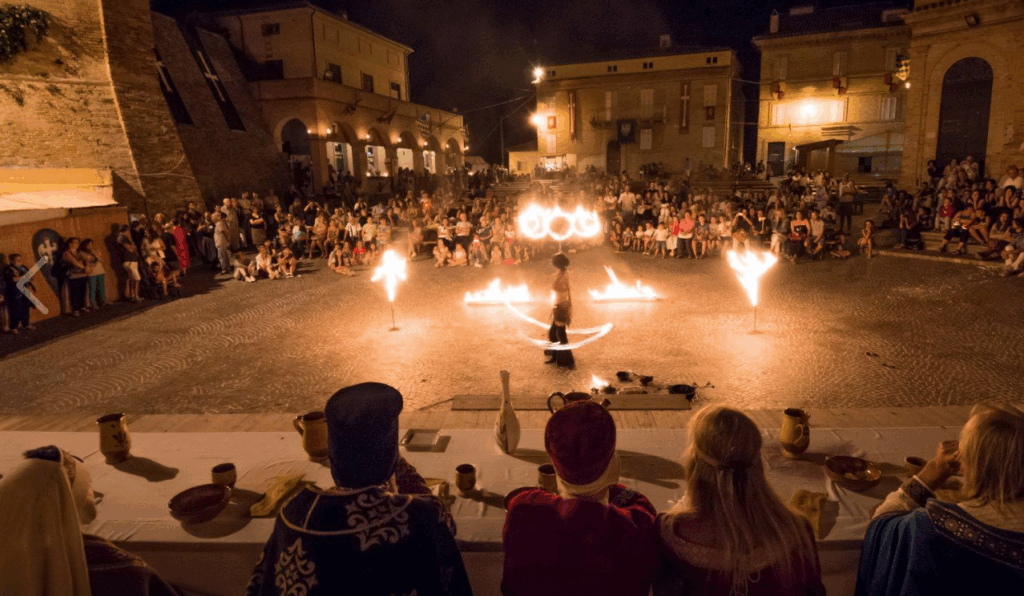
Grottazzolina is a place where traditions and flavors intertwine with everyday life. The main celebration is the historical reenactment “I Giorni di Azzolino,” held in July, featuring medieval tournaments, artisan workshops, and themed performances dedicated to the figure of Azzo VII d’Este. Among the most evocative events is the Feast of Our Lady of Perpetual Help, celebrated on the first Monday of June, with decorative lights, processions, and band concerts.
During the summer, the program “AniMARE il Borgo” brings music, theater, gastronomy, and culture to the most picturesque squares, enlivening the historic center with the contribution of local associations.